

There are over 2200 research papers that document that expressive writing in some form is effective for improving both your mental and physical health. I have been adamant for a long time that you should write down just negative thoughts – not positive ones. That has also been the general feeling of many papers. Interestingly, I ran across several papers documenting that writing down positive thoughts is equally effective. It appears that expressing thoughts and emotions works. The debate is how and why it is effective. One theory is that it switches your thinking into a slower, more rational mode than automatic fast thinking. For me, writing was the first and only effective strategy that pulled me out of a 15-year tailspin. I had been in psychotherapy for 13 years and continued to spiral downward. I am an advocate of psychological interventions, but they have to be combined with some other tool that helps to calm and re-route the nervous system.
Not a definitive solution, but a mandatory starting point
My first step with every patient is to have them write down their thoughts and instantly destroy them. Thoughts are only connections between neurons within your brain. There is no substance to them – none. However, as your body secretes chemicals in response to thoughts, they seem like real and part of your identity. Your goal is to bring these thoughts to life as vividly as possible and then separate from them. Unhooking from the train Meaningful healing will not occur until you start writing. It has been the one common strategy used by essentially every patient that I have seen to go pain-free. I ask that patients begin this process before doing much reading, as it is the true start of the program. Write Your Way Out of Pain
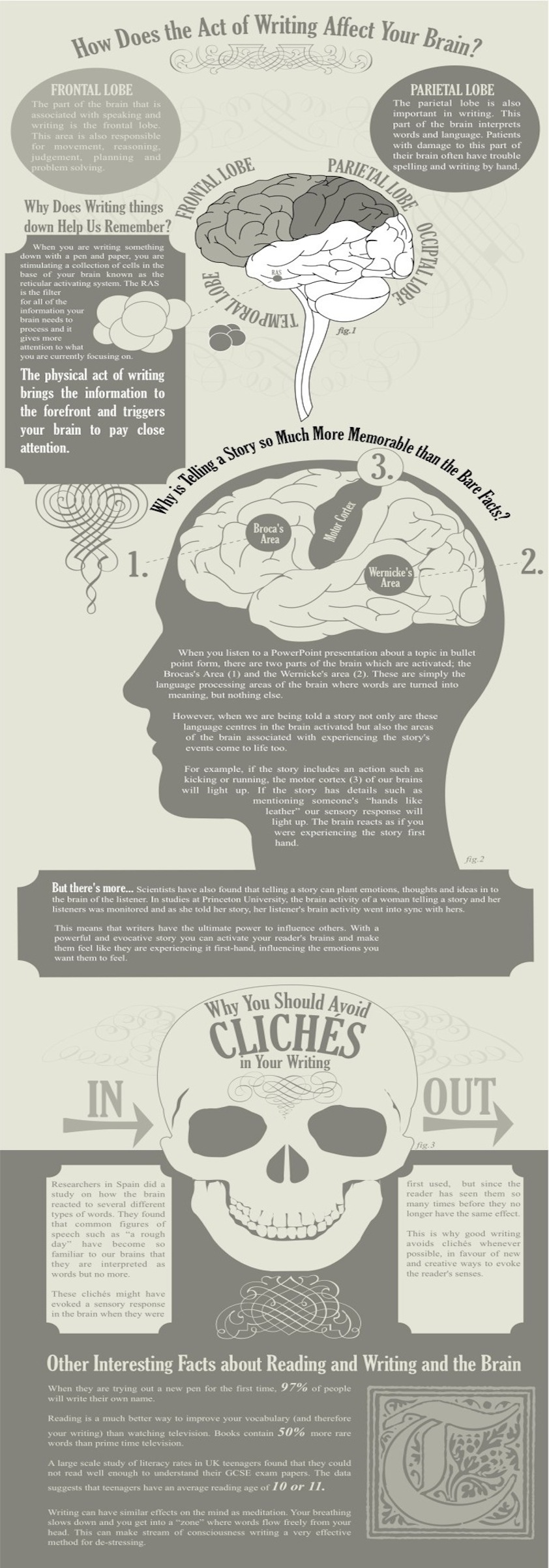
Much of the DOC program is based on neuroplasticity, which is the term for your brain’s capacity to physically change. It can grow new nerve cells, lay down myelin, and form new circuits and connections at any stage of your life. In fact, it has been demonstrated that your brain physically shrinks in the presence of chronic pain and re-expands when the pain resolves. The basic steps of the reprogramming process is: 1) awareness, 2) separation, and 3) reprogramming. I feel that the expressive writing accomplishes the awareness and detachment steps simultaneously. There is now a space between you and your thoughts that is connected with the physical sensations of vision and feel. Somehow, the brain processes this separation.
The reprogramming process begins the day you begin to write. Write anything – positive or negative. It is important to immediately destroy them so that you can write with complete freedom. I encourage people to write for 10 or 15 minutes a couple of times per day. I do not encourage writing throughout the day. What I do suggest is to combine the writing with active meditation. You choose a physical sensation to place your mind on for 15-20 seconds as many times a day as you can. You have now shifted your nervous system off of unpleasant pathways to neutral or pleasant ones. I would like to do it more, but I am probably successful 20-30 times per day. Instead of doing battle with unsolvable circuits, you simply shift your attention to other sensations.
Creating New Circuits
Thoughts are connected with:
- Other thoughts
- Emotions
- Physical sensations
- Mental pictures
Each of these associations creates new neurological pathways. With writing, thoughts are connected to vision and feel, creating new circuits. It clarifies your thinking, and it is also the starting point. The writing exercise is not the solution for your pain. You will discover your own solution as the process unfolds.
Three events occur with Writing
1) A new neurological pathway is created by associating thoughts with vision and feeling.
2) A “space” is created between you and your thoughts.
3) These spinning circuits will slow down.
For instance, if you write down “My daughter is lazy,” you have slowed your thinking. You might notice that you have labeled her. In addition, your eyes read those words, and the thought goes back into your brain on a different circuit. You have also felt your pen write the words, so it is also associated with a sense of feeling. You can now see the effect this thought may be having on you and your relationship with your daughter. You now have the option to create an alternative response and a new neurological circuit.
BTW, when people write, they notice that “issues” come up. They are not issues to be solved. They are just thoughts, and the only goal of the writing is separation. If you choose to analyze and solve them, your attention remains on these disruptive pathways. Your brain will develop exactly where you place your attention. If you try to engage with these powerful pathways, you might as well be placing your hand into a hornet’s nest. Reprogramming is analogous to diverting a river into a different channel.

The Auditory Route
Instead of writing, just saying the thought in private is also effective. You have still created a space between you and the thoughts, and it is re-entering your nervous system through the auditory nerve. David Burns, in his book “Feeling Good,” suggests an exercise in which you stand in front of a mirror and talk to yourself using the voices in your head. You would never talk to another human being the way you talk to yourself. (Check on David Burn’s comments on this.) I recall that this exercise was one of the first to really begin my journey out of the hole. It quickly became apparent how irrational the voices in my head were.
You Can Only Let Yourself Heal
Patients often return disappointed that they have not had more immediate results. The writing process is not a quick fix or the definitive solution for your pain. It is actually just a punctuation point and the beginning of your healing journey. Once you have separated yourself from your thoughts, you have to choose where to place your attention. That is where the healing really begins. You will become an observer of your own healing. A Bunch of Balloons
There may be an initial increase in your anxiety and pain. I then know my patients are actually writing. Although you may realize that the “issues” that arise are just thoughts you have reacted to or suppressed for so long, they will still seem like your reality. They are real thoughts with a significant chemical reaction from your body. But they are not reality, nor are they solvable. Within a couple of weeks, the initial discomfort of writing down thoughts will diminish. Then the energy spent in trying to deal with these permanent pathways will be available for you to live your life on your terms. I have probably 200-300% more energy than I did in high school. The effects of this simple tool are powerful and consistent.
Warning: Please note that some people may experience an early decrease in mood and sense of well-being. Pain may also initially increase. This is not a bad prognosis for a long-term beneficial effect. It is recommended that you limit writing to about 20 minutes at a time until you feel better. If you feel too uncomfortable, stop the writing immediately and contact your physician or mental health professional.
Summary of Expressive Writing:
- Write down any of your thoughts and emotions
- Immediately destroy the piece of paper so you can write with complete freedom
- Do this once or twice a day for 5 to 15 minutes.
- Combine it with active meditation, which you should do as often as you think about it.
- Research suggests that writing at bedtime reduces the time it takes to fall asleep.
- If your mood plummets, you should stop and consult with your doctor.
- Consider this a lifetime practice similar to brushing your teeth. There is no beginning or endpoint.
This PDF provides a comprehensive overview of expressive writing.
Listen to the Back in Control Radio podcast, Write and Don’t Stop!
Mini Lesson for Finding Calm in a Storm – Ellen Alden