
Overview
- Healing happens as you learn skills to feel safe – regardless of circumstances.
- Navigating challenges is basic to staying alive. Why get upset when they arise?
- The bigger the stress, the greater the opportunity to practice your skills.
- Deal with it head-on instead of feeling sorry for yourself.
Nikolaos is a young gentleman who lives in Sicily. He connected with my work through social media and had done extensive research in the Mind-Body world. He was suffering badly from repetitive unwanted thoughts (RUTs). They were invasive and incredibly disruptive to the quality of his life. He had tried every possible treatment available to him, but he kept getting worse.
A slow start
I distinctly remember my first conversation with him. I was standing at baggage claim, returning from the Dominican Republic about a year and a half ago. It was one of the most circular conversations I have ever had with a new person. He focused on generating enough belief in a healer or philosophy to heal. He was also using affirmations to reassure himself. Unfortunately, convincing yourself that you are OK keeps you focused on yourself, and you are stirring the same pot. He was desperate.
I explained that my approach was to apply established science to his situation: learning tools to calm and reroute the nervous system.

Yaraslava/AdobeStock
I hadn’t heard from him for a while; then there were some intermittent phone calls. He didn’t like my message about “letting go.” All of us want to fix ourselves; it is a huge paradigm shift and initially unsettling. He wanted certainty, but it doesn’t exist in the realm of pain or life. Living with uncertainty is a learned skill, and few people want to embark on this journey. I still didn’t have much hope for him, but I had learned that everyone has their own healing timeline and that persistence is key.
Engaging in a healing process
He enrolled in The DOC Journey, the course I created. I ask people to spend no more than 10-20 minutes a day on it. Just going through a course or reading a book won’t change much. The focus must be on mastering skills. Meaningful changes usually take three to six months, and once you hit the tipping point, it is game on. Your brain has changed; you are processing new information through a different lens.
About six months into his journey, I sensed a significant shift, but he was still mired in RUTs. Every time he lost faith in the process, he slipped back into the Abyss. I kept explaining that healing happens from within, not from external forces. We went through this cycle many times. Stress makes RUTs worse, and during all of this, his mother passed away, his job was unstable, and he was still living at home. None of this seemed helpful. However, it is critical to use adversity as an opportunity to learn and improve your skills. Our usual goal is to get rid of stress quickly or avoid it, which further sensitizes the nervous system.
About three months ago, he developed misophonia, an extreme sensitivity to sound. He not only returned to his RUTs and pain but also became despondent, believing he would not get past it and catastrophizing that he would never heal. I again encouraged him to use the situation as an opportunity to practice his calming and rerouting skills. It resolved in about two weeks. He felt quite good and believed he was on a roll. I warned him not to get too attached to feeling so good, as adversity is inevitable and the gap between feeling great and feeling poorly is wider.
Can’t make this up
Then all hell broke loose. About six weeks ago, he spent the weekend with friends and had a great time; he felt better than he had felt in years. On the way home, a car swerved into his lane, causing a high-speed head-on collision. Fortunately, his only injury was a bruised leg. He was admitted to the hospital; his roommate was the person who hit him. As they were talking, it turned out that this young man was attempting suicide and chose to randomly drive into an oncoming car. It wasn’t a great moment. Then, a short time later, his roommate’s father walked into the room and threatened him with physical harm if he reported his son to the police.
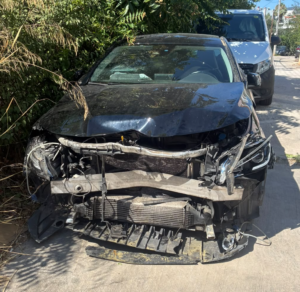
As difficult as this scenario was, the worst part came when he got home, and his grandfather verbally attacked him for being out so late and irresponsible. He was crushed, but he now had a clear picture of the environment he was raised in.
Out of the Abyss
I wanted to check in and see how he was doing, and I assumed he was deep in the abyss and that it would take some effort to pull him out. I was shocked; he was not only staying out of it, but he also felt better than he ever had in his life. He felt he had used his tools, rode the ups and downs, and was confident he could handle any adversity going forward. His excitement was palpable.
I have witnessed this level of transformation hundreds of times, including in my own experience. I am always surprised when it happens, and it is unpredictable. That’s why I quit my practice to do this work. I now know that this is called “self-induced healing.”
Self-induced deep healing
There are several components, and it is not formulaic.
- At the core is learning to generate a sense of safety, which happens by developing skills to take care of yourself.
- You live the life you have today, using the resources you have.
- People stop looking for answers to fix themselves and start living their lives on their own terms. That means letting go of anger – always the tipping point.
- Adversity is part of life and, by definition, unpleasant. Facing it and walking into it lessens its effects. Being angry about adversity is problematic. It never ends, and when do you get to enjoy your life?
Healing is about connection. Although I was able to guide him, his healing came from within. He faced adversity head-on.
Recall the “C” quence of healing in the metaphor of a tree. The roots are connected to every aspect of the soil of your past; the trunk is the set of skills to navigate life as the past manifests in so many ways; the branches are where healing happens. As you creatively reach up and out, bringing new data into your brain, you have changed it in a powerful way.
Once you reach this tipping point, the journey has just begun. There is no limit to where you can go – from reaCtive to Creative. See first and Let’s Wake Up.