
Overview
- The US population is becoming increasingly ill despite spending the most money.
- Mainstream medicine has an incorrect (and damaging) paradigm of chronic illness.
- We have disconnected from the basic science of the human body.
- Understanding the common nature of chronic illness and disease opens the door to solutions.
Why do you think our burden of chronic mental and physical illness continues to rise? It is because mainstream medicine is basing care on an incorrect paradigm about chronic disease. I remember in college (a while ago) that medical costs consumed about 8% of gross national product. Now it’s around 18% and continues to climb.1 We spend over 4X per capita on healthcare as any other developed country. Guess what? These other countries have lifespans that are increasing, whereas the US has not only leveled off but is dropping.2 We have some of the most advanced technology in the world, and it works wonders on acute symptoms and illnesses. Chronic illness is different. It is a state? What do I mean?
Chronic illnesses are different than acute ones
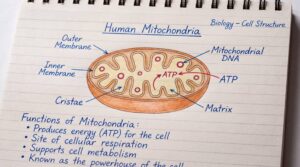
Experts in cell biology have linked chronic diseases to problems at the cellular level. One key factor is the mitochondria’s inability to complete the healing cycle.3 Mitochondria are small structures in the cell that produce energy for life, but they also have their own DNA and perform many other functions. They are part of the cell’s defense system, break down under stress, and reform under safe conditions. However, under chronic stress, they cannot complete their healing cycle, which creates downstream problems, including inflammation. This state must change for acute interventions to be effective. Many other intricate processes support healing, and mitochondria are at the center.
Much of medicine focuses on abnormal anatomy, and if it isn’t present, there is nothing to do except treat symptoms. Most chronic illnesses are not caused by abnormal anatomy. They are caused by the body being in a constant state of threat, breaking it down through fight-or-flight physiology. We have known for over 50 years that chronic stress causes serious illness and disease. 4
The bottom line is that your body breaks down under chronic threat and regenerates and heals when in a state of safety. This has little to do with anatomy. Abnormal anatomy usually results from sustained exposure to stress physiology. Examples include inflammatory bowel disorders, cancer, osteoporosis, vascular disease, dementia, chronic pain, mental health disorders, Parkinson’s, and adult-onset diabetes, to name a few. None of these conditions began with a structural problem. What is ironic is that we learned this during our basic science years in medical school, and somehow, during the rest of our training and practice, we have disconnected from root causes and keep forgetting to ask, “Why?”
It is even more tragic that, with the right paradigm, almost all of these illnesses and diseases are preventable and treatable, and some are reversible. A growing group of practitioners understands this, and it is not that difficult. Again, most of us already know this. What is even more disturbing is that your body knows how to heal, far beyond what a doctor can do. We are not tapping into that capacity.
I quit
I did not leave my surgical practice to manage chronic pain. I kept seeing hundreds of patients become symptom-free. I initially thought I had a secret sauce. I eventually learned that any approach that helps a person feel safe enables healing. The one factor that predicts success is willingness to engage and persistence. Meaningful changes occur over three to six months, and once you are out of the “Abyss,” healing continues indefinitely.
I recently received this email, which mirrors what I have seen hundreds of times. I call it “self-induced deep healing.” I borrowed the term from Bernie Siegel, who used it to describe his exceptional cancer-survivor patients who went on to live normal, cancer-free lives. The same principles apply to other chronic illnesses. I am sharing this not to present my process as superior to others. It is just one option. The critical factor is connecting with the principles, in whatever form they take, and mastering the skills to calm and reroute your nervous system.
| The DOC Journey |
| Dear Dr. Hanscom,
I am writing to express my heartfelt gratitude for your process and work. I started down the “mindbody” journey just recently in December 2025. While working a shift at the endoscopy center, I noted that a patient had crossed off “migraines” in her health history and wrote “resolved” next to it. I had struggled most of my life from headaches and migraines so after developing a rapport I asked her how her migraines resolved. She told me, “The Sarno method”. I didn’t inquire further but I certainly started my research! I’d consider myself a migraine expert. Before December 2025 I spent a lot of my time reading neurology literature and scouring the internet for possible causes and treatments for migraines. I’ve done it all, countless medications, supplements, acupuncture, Botox, dietary changes, avoiding triggers which have since melted away, an extensive migraine log, the list goes on and on. I simultaneously belonged to every Facebook migraine support group there was and talked to anyone who would listen to me about my pain. (Who would’ve known this is exactly what you should not do). Yet somehow, mindbody techniques and neuroscience had never come up. If they had, I likely would have glazed over them, assuming they were simply referring to yoga, which I was already practicing regularly. I started with the Curable app and read Dr. Sarno’s books, both of which I found helpful, although they didn’t completely resonate with me. I then read books by Dan Buglio and Nicole Sachs, but it wasn’t until I came across your name in a Reddit post that I began to experience a meaningful shift. Your references to nervous system regulation and safety physiology were a true lightbulb moment for me. I have since read your books and follow the DOC Project Expressive writing has been instrumental in helping me work through everything I have repressed in my life. Next to repression in the dictionary should be a picture of me. I had a rough and sad childhood that I neglected to acknowledge. I was also bad at feeling my feelings, even with everyday occurrences. Both expressive writing and active meditation have helped me start to defeat perfectionism and calm the threat physiology. Through your methods, I have finally found the tools to regulate my stress physiology so I can finally feel safe. I found the DOC project just in time. I was in the abyss from 2019 to 2025. I was desperate from trying to function with about 20 migraine days a month while taking care of a toddler and working through a pandemic. I was in a dark place and had lost hope. I don’t know how I managed. I am now essentially pain-free. I get one or two mild menstrual migraines a month, which I believe will finally go away when I hit menopause in about a decade. But the other 28 calendar days are pain-free, rich, and beyond anything I could’ve ever hoped for. 2026 has been the best and healthiest year of my life. Two days a week, I have a longer commute and love to listen to your podcast on the way to work. I always learn something new and hear helpful reminders. Please know that your work is so meaningful, and though I have never formally been your patient, you have helped me change my life for the better. I am forever grateful! All of the best, Alice There is rarely one answer The Curable app is excellent; Dr. Sarno’s concepts are foundational; Dan Buglio and Nicole Sachs have significant success; Howard Schubiner is a major mentor and recently released a new edition of Unlearn Your Pain; Rachel Zoffness is a close friend and has a wonderful book, Tell Me Where It Hurts. Dave Clark has been remarkably diligent since the 1980’ in bringing these concepts into public awareness, and founded the non-profit entity, ATNS (Association for Treatment of Neuroplastic Symptoms). Hundreds of others have their own versions of these concepts that promote healing. This list is only a small sampling. My approach is one of them, but note the other ones she tried. Other approaches are effective and additive; it is doubtful she would have healed so quickly without the benefits of those resources. Everything helps, and time and repetition are key. Her journey could have been in reverse order with the same success. Maybe The DOC Journey was the first one she might have tried and didn’t seem to work, and then had success with another one. Whatever process allows you to feel safe and connected will induce healing.

Mainstream medicine must understand and connect to these concepts, and soon. Currently, the medical establishment is digging in its heels – hard. Change will occur only if the public demands it, and it must begin with individuals creating a collective effort. Anyone can heal, given a chance. References 1. Peterson-KFF Health System Tracker, “How Does Health Spending in the U.S. Compare to Other Countries?”, published March 11, 2026, https://www.healthsystemtracker.org/chart-collection/health-spending-u-s-compare-countries/. 2. Organization for Economic Co-operation and Development (OECD), Health at a Glance 2025: OECD Indicators (Paris: OECD Publishing, 2025), https://doi.org/10.1787/8f9e3f98-en. 3. Robert K. Naviaux, “Incomplete Healing as a Cause of Aging: The Role of Mitochondria and the Cell Danger Response,” Biology 8, no. 2 (2019): 27, https://doi.org/10.3390/biology8020027. 4. Thomas H. Holmes and Richard H. Rahe, “The Social Readjustment Rating Scale,” Journal of Psychosomatic Research 11, no. 2 (1967): 213–18, https://doi.org/10.1016/0022-3999(67)90010-4.
|